



Menu Content/Inhalt

Search

Login


Tierra Design - Banyan Tree – LiJiang


Abstracting the Rural Landscape - a romantic contemplation by Franklin Po.


Tierra DesignTierra Design


The softscape design concept for the all-villas resort reflects a subtle abstraction of the nine hundred year-old ancient city of Lijiang. It is a quiet and informed translation of the existing historic elements into a language of modernity.

The juxtaposition of the planting material does not attempt to copy a Chinese scenic landscape nor does it follow what constitutes traditionally a Chinese garden typology. It offers an abstracted microcosm of the ancient city Lijiang experience. One constant factor throughout the resort is the manner in which the softscape is divided into large rectangular plots expressing a tension between the aesthetics of an ordered matrix and the naturalistic planting.


Tierra DesignTierra Design


Tierra DesignTierra Design


To achieve this effect, planting is done in grids to form hedges of flowering shrubs and clusters of bamboo. Specimen tree species are planted as distinctive trees with characteristically good form.

The Villa Courtyards attempt to depict a perception of home – where the landscape feels comfortable and intimate, just as a diligent home-owner would have tended to its every need.

Plant choices and arrangements therefore echo these qualities – chosen with low maintenance in mind, with soft lawns of mosses and grass comfortable to tread on with bare feet. Potted plants, bonsai trees and carefully chosen stones are positioned at strategic locations around the yard in the same spirit as a Chinese painting.


Tierra DesignTierra Design


Tierra DesignTierra Design


Tierra DesignTierra Design


The Landscape Architect’s goal was to blend the landscape design and planning into the architect’s adaptation of vernacular Chinese architecture for this five-star Banyan Tree Resort in Lijiang, China.  By incorporating the 16th century Lijiang Old Town village elements - its infrastructure of pathways, spatial hierarchy, waterways and pond system, planting types, materials, texture and color - the spirit of the ancient culture have been retained within a contemporary setting.

The resort is designed to capture the essence of the mythical environment of Shangrila -- the dense urban form of the bustling old town, the structure of narrow alleys and waterways, the numerous arching bridges, the entry courtyards and axial layout of residential compounds, the carefully regulated communal water supply ponds for potable water and for washing, the agricultural setting, highlighted by brilliant, massed crop colors in broad rectangular fields of mustard, rape, sunflowers, rice, barley, wheat, soybeans, buckwheat tobacco, and the ever-present orientation to the mystical mountain -- interpreting it in a contemporary context, with modern amenities and luxurious details. From the cursory look, the resort blends into the existing neighbourhood and seems like just another farm compound. However, the villa structures and spaces are entirely modern in their function, design, and finishing. The entry to the site is an understated picture of elegance with a simple water and granite fountain feature anchoring the driveway and drop-off area. 


Tierra DesignTierra Design


Tierra DesignTierra Design


Tierra DesignTierra Design


Access paths and villas are laid out east-west, in offset modules, between the main axes. These form more irregular, informal, small spaces leading to courtyard entries for the villas. Waterways line all the access paths, providing a continuous water feature at the entry of each unit, a highly auspicious feature in Chinese culture. The small canals lead to a central basin that is the main feature of the formal, ceremonial axis, and a focus for leisure activities along the edges and on islands. The lake interacts with leisure activities along its edges and islands, and reflects a pagoda and the snow-capped mountain peaks beyond.

The gardens of each villa are conceptualized as Chinese courtyards with traditional patterned paving and planting motif.  A heated private pool is strategically elevated within the courtyard to enjoy not only views to the north but also views to the villa. For each villa type there are several garden variations and despite the uniformity in the architecture, the landscape provides a unique and varied experience.

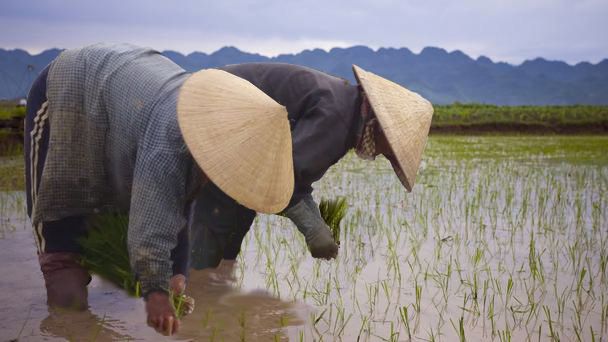
Waterways in the old town are typically lined with willows - that association is emulated in the project. The local agricultural landscape of seasonal colorful field crops is reflected in rectangular ground-cover and shrub masses, scaled in proportion to the spaces created by the walls of the villas. Adopting a characteristic of the surrounding landscape, planting in the circulation corridors are predominantly masses of low shrubs and groundcovers. Trees as utilized as feature elements and are positioned at focal points, to not only achieve a canopy effect but also to frame selected views and vistas.


Tierra DesignTierra Design


Tierra DesignTierra Design


Although the potential environmental impacts were not intensively examined or required by local authorities, a conscious attempt was made to avoid any major impacts by carefully selecting plant material that is low maintenance, pest free, and not reliant on a sophisticated irrigation system. The design team also made sure that the water bodies (all man-made) do not use groundwater, which is reserved for agriculture.  All sewage and solid waste loads were also ascertained to be compatible with local treatment and disposal systems. All internal circulation is by electric golf carts.

Local coordination and implementation was performed by a Local Design Institute whose primary purpose was to reinterpret the technical text into Chinese and then to function as major coordinator for the project with all local subcontractors and officials. The landscape architects worked closely with the Local Design Institute and provided occasional intensive on site review during the implementation stage. All plant materials are local to the region and were sourced and selected for review before planting. Local expertise was provided by a local “horticulture expert” who understood the viability and availability of indigenous plant materials for this project

By its commitment to the traditional urban form of Lijiang, the project has integrated a new, modern, high-profile use into the community, reinforcing the integrity and validity of the historic model.


Tierra DesignTierra Design


Tierra DesignTierra Design


Image/Text Credits:

Courtesy of Tierra Design